Quality Assurance at Keron Lifesciences: From Raw Materials to Finished Products
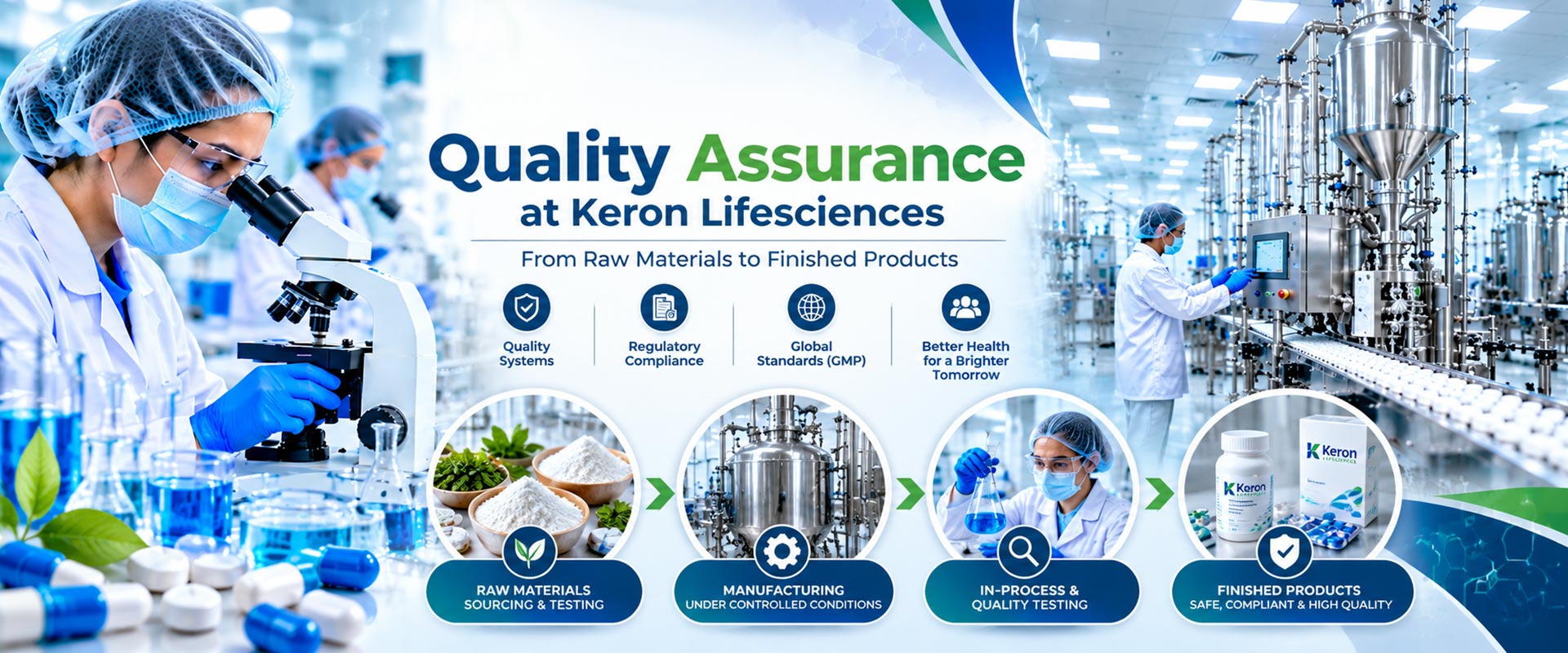
Quality assurance is one of the most important foundations of pharmaceutical manufacturing, ensuring that products are consistently safe, effective, and of the required quality. The quality of a finished pharmaceutical product depends on a controlled chain of activities that begins with the selection and approval of raw materials and continues through manufacturing, in-process monitoring, testing, documentation, packaging, and final product evaluation. At Keron Lifesciences, quality is built into every stage of the product lifecycle, from raw material qualification and manufacturing to testing, packaging, and final product release, through a robust quality system focused on compliance, traceability, consistency, and continuous improvement
Quality Assurance at Keron Lifesciences
Keron Lifesciences Pvt. Ltd. is a pharmaceutical contract manufacturing organization based in Dehradun, Uttarakhand, India. The company provides pharmaceutical manufacturing solutions for human and animal healthcare products and offers services including contract manufacturing, formulation development, technology transfer and scale-up, and regulatory support.
Quality is one of the company’s core values, alongside regulatory integrity, operational excellence, partnership, ethics and responsibility, and people and safety. Keron Lifesciences follows quality-oriented approach that emphasizes quality at every stage of the manufacturing lifecycle through effective controls, monitoring, and documentation, rather than relying solely on final product inspection.
Quality Begins with Raw Materials
The foundation of pharmaceutical product quality begins with the materials used in manufacturing. Active pharmaceutical ingredients, excipients, packaging materials, and other production inputs must meet predefined specifications before use in production.
Keron Lifesciences’ emphasizes supplier qualification and testing of incoming raw materials before materials are approved for production. This approach provides an important control point at the beginning of the manufacturing process and helps ensure that production starts with materials that meet applicable requirements.
The control of incoming materials also supports traceability by maintaining documented records of suppliers, material batches, testing, approval status, and their use throughout the manufacturing process.
Supplier Qualification and Material Verification
A pharmaceutical manufacturer depends on a reliable supply chain. The quality and consistency of incoming materials can influence manufacturing performance and finished-product quality.
Supplier qualification is therefore an important part of pharmaceutical quality management. Keron Lifesciences incorporates supplier controls into its quality system through the evaluation of suppliers and the testing of incoming materials against established specifications before approval for use in manufacturing.
These controls help ensure that only approved materials enter the production process while supporting traceability and quality throughout the manufacturing lifecycle.
Documentation and Material Traceability
Documentation connects different stages of pharmaceutical manufacturing. Information relating to incoming materials, testing, approvals, manufacturing activities, and finished products needs to be recorded accurately to support traceability.
Keron Lifesciences emphasizes manufacturing documentation and batch records as part of its quality and compliance framework. Maintaining appropriate records allows relevant manufacturing information to be reviewed when necessary and provides an important foundation for quality investigations and regulatory assessments.
Traceability also helps establish a connection between the materials used in a batch and the finished product produced from those materials.
Controlled Storage and Material Handling
Appropriate storage and handling are important for maintaining the quality of pharmaceutical materials before they enter production. Materials may have specific storage conditions, handling requirements, identification requirements, or expiry considerations.
A quality-focused manufacturing system therefore requires clear procedures for receiving, identifying, storing, issuing, and handling materials. These controls help minimize the possibility of mix-ups, contamination, deterioration, or incorrect material use.
Keron Lifesciences’ manufacturing approach incorporates controlled material management as an integral part of its quality system, supporting the proper receipt, storage, handling, and issuance of materials throughout the manufacturing process.
Manufacturing Under Controlled Procedures
Once approved materials enter production, manufacturing activities must be performed according to established procedures. Standard Operating Procedures provide documented instructions for important activities and help establish consistency across manufacturing operations.
At Keron Lifesciences, controlled procedures, manufacturing documentation, equipment controls, and quality checks form part of the company’s approach to pharmaceutical production. Adherence to defined processes helps production personnel perform activities consistently and provides documented evidence of manufacturing operations.
In-Process Quality Checks
Quality assurance continues throughout manufacturing. In-process checks provide opportunities to evaluate important production stages before a batch reaches completion.
Depending on the product and manufacturing process, in-process monitoring may include sampling, process checks, physical observations, equipment-related checks, and evaluation of critical manufacturing parameters. These controls can help identify unexpected variations at an earlier stage.
Keron Lifesciences incorporates in-process monitoring into its quality-focused manufacturing approach, supporting process control, batch consistency, and product quality
Process Validation and Consistency
A pharmaceutical manufacturing process should be capable of consistently producing products that meet predefined quality requirements. Process validation provides documented evidence that a process operates effectively under established conditions.
Validation can involve manufacturing processes, equipment, cleaning procedures, analytical methods, and other critical systems. Keron Lifesciences’ quality approach includes validation and process-control principles as part of its pharmaceutical manufacturing framework.
The objective is to establish confidence that important manufacturing activities are appropriately controlled and repeatable.
Quality Control During Production
Quality Control works alongside production and quality assurance to evaluate materials, in-process samples, and finished products against established specifications.
Quality control activities may include sampling, analytical testing, physical evaluation, microbiological testing, and other product-specific examinations. The exact testing requirements depend on the pharmaceutical formulation and applicable specifications.
Keron Lifesciences ncorporates quality-control activities into its quality system to support product quality, manufacturing consistency, and compliance with established requirements.
Finished Product Testing
The completion of manufacturing does not represent the end of the quality process. Finished pharmaceutical products must to undergo appropriate testing and evaluation before release.
Depending on the product, finished-product testing may include chemical analysis, physical testing, microbiological evaluation, and stability-related studies. These activities provide documented evidence that the batch conforms to established specifications.
Keron Lifesciences’ published compliance information identifies finished-product testing as an important component of its quality-control approach.
Final Product Inspection and Release
Finished products require appropriate review before release and distribution. Quality documentation, test results, manufacturing records, and other relevant information form part of the final batch evaluation process.
A controlled release process helps ensure that a product are not approved for distribution until the required manufacturing testing, and quality activities have been completed and reviewed.
For pharmaceutical manufacturing partners, this final stage provides an important link between production activities and the quality requirements expected of the finished product.
Batch Manufacturing Records
Batch manufacturing records provide a detailed history of pharmaceutical production. Depending on the manufacturing process, these records may include information on materials, quantities, manufacturing stages, equipment, personnel, process parameters, in-process checks, yields, deviations, and other relevant production activities.
Keron Lifesciences emphasizes batch manufacturing documentation as part of its quality and compliance framework. Proper batch records support traceability and provide documented evidence that manufacturing activities were performed according to established procedures.
Analytical Records and Quality Documentation
Analytical records provide information about the testing performed on raw materials, in-process materials, and finished products. Together with manufacturing records, they help create a documented history of product quality.
Maintaining accurate analytical and manufacturing documentation is important for regulatory compliance, quality reviews, customer requirements, investigations, and product traceability.
Keron Lifesciences’ quality framework incorporates analytical reports and manufacturing documentation as integral components of its pharmaceutical quality system.
Traceability Across the Manufacturing Lifecycle
Traceability is the ability to track relevant information about a pharmaceutical product throughout its lifecycle. This can include the source of raw materials, manufacturing activities, testing, packaging, and final product information.
Effective traceability helps manufacturers understand the complete history of a batch and provides valuable information during quality investigations, audits, regulatory reviews, or other quality-related activities.
Keron Lifesciences’ focus on batch documentation, material controls, analytical records, and manufacturing procedures supports a robust approach to quality assurance and product traceability.
Managing Deviations and Quality Events
Manufacturing processes are designed to be controlled and consistent, but quality systems must also be capable of effectively managing unexpected events. Deviations, out-of-specification (OOS) results, process variations, or other quality events may require investigation according to established procedures.
A structured investigation help identify the root cause of a quality event and determine appropriate corrective or preventive actions (CAPA). CAPA, measures are then implemented to address identified causes and reduce the likelihood of recurrence
Keron Lifesciences incorporates risk management and CAPA principles into its quality-focused pharmaceutical manufacturing approach.
Risk Management and Product Quality
Risk management provides a proactive approach to identifying, assessing, and controlling potential risks to pharmaceutical quality, Risks may arise at various stages, including material procurement, storage, manufacturing, equipment operation, testing, documentation, packaging, and distribution.
A risk-based quality approach helps organizations prioritize controls and focus resources on activities that may have a significant impact on product quality.
For a contract manufacturing organization, effective risk management support manufacturing consistency, product quality, and the continual improvement of the overall quality-management system.
Quality Assurance Versus Final Testing
Quality assurance should not be viewed solely as the testing finished products. While final testing is an important part of pharmaceutical quality control, but quality assurance covers a much broader system.
Quality assurance includes the supplier qualification , training, documentation, manufacturing controls, validation, audits, risk management, and continual improvement activities that help build quality into products throughout the manufacturing process.
Keron Lifesciences’ approach reflects this philosophy by integrating quality considerations across raw materials, manufacturing processes, testing, documentation, and regulatory compliance.
Regulatory Compliance and Quality Systems
Pharmaceutical manufacturing operates within a highly regulated environment. Manufacturers must maintain appropriate systems for production, quality control, documentation, licensing, regulatory requirements, and product compliance.
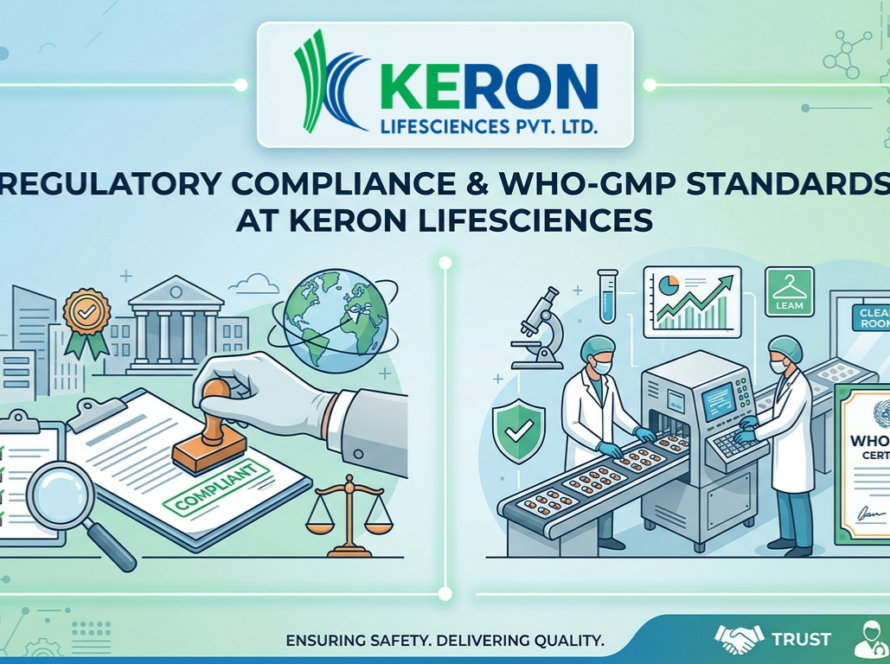
Keron Lifesciences provides regulatory and compliance support as part of its pharmaceutical services, including support related to DCGI and CDSCO approvals, State FDA licensing, and export NOC documentation. Its quality-oriented manufacturing approach is designed to align operational processes with applicable pharmaceutical and industry standards.
Continuous Quality Improvement
Quality assurance is an ongoing process. Manufacturing organizations must regularly review performance, evaluate quality data, investigate deviations, address audit observations, update procedures as needed, and provide continuous training..
Continuous improvement helps pharmaceutical manufacturers strengthen processes and maintain consistent quality as technology, regulations, products, and customer expectations evolve.
Keron Lifesciences identifies operational excellence as one of its core values, supporting the continual improvement of processes while maintaining product quality, compliance, and regulatory expectations.
Why Raw Material-to-Finished Product Control Matters
A pharmaceutical product passes through multiple stages before reaching the market. A quality issue at any stage can potentially affect the final product. This makes end-to-end quality management essential.
By controlling incoming materials, qualifying suppliers, testing raw materials, following manufacturing procedures, monitoring production, conducting finished-product testing, maintaining documentation, and supporting batch traceability, pharmaceutical manufacturers can establish multiple quality checkpoints throughout production.
For pharmaceutical companies evaluating a contract manufacturing partner, understanding these quality controls can provide valuable insight into the manufacturer’s overall approach to product consistency and compliance.
Keron Lifesciences' Quality-Focused Manufacturing Approach
Keron Lifesciences brings together pharmaceutical manufacturing capabilities, quality management, regulatory support, formulation development, technology transfer, and contract manufacturing services. Its quality philosophy emphasizes controlled processes and documented systems, and continuous oversight throughout the manufacturing lifecycle.
The company’s focus on quality, regulatory integrity, operational excellence, and partnership provides a strong foundation for pharmaceutical businesses seeking reliable manufacturing support in India and international markets.
Conclusion
Quality assurance at Keron Lifesciences begins with the control of raw materials and continues through supplier qualification, material testing, manufacturing controls, in-process monitoring, process validation, quality control, finished-product testing, documentation, batch traceability, and final product evaluation.
This end-to-end approach demonstrates that pharmaceutical quality extends beyond final product inspection. Each stage of manufacturing contributes to the quality safety, and consistency of the finished product. For pharmaceutical companies seeking a contract manufacturing partner, a structured approach to quality assurance, traceability, regulatory compliance, and continuous improvement is an important consideration.
Keron Lifesciences places quality and regulatory integrity at the center of its pharmaceutical manufacturing operations, supporting customers with manufacturing and pharmaceutical development solutions from its Dehradun, Uttarakhand facility.

Keron Lifesciences